Atlas: The Titan Who Holds Up the Sky
When the Titans lost their war against the gods of Olympus, Zeus reserved a singular punishment for one of them. Atlas — a Titan of immense strength — was condemned to stand at the western edge of the world and hold up the heavens on his shoulders, for all eternity. Not the earth, as it is often told, but the whole weight of the sky.
It is one of myth’s most enduring images: a figure who carries an impossible weight and does not put it down. Over time Atlas became the very symbol of endurance — of bearing what must be borne without breaking.
What he stands for
The meaning of Atlas
Atlas at a glance
- Endurance — strength that does not quit
- The Sky — the weight only he could hold
- Responsibility — carrying what is yours to carry
- Steadfastness — holding your ground, always
Even Heracles crossed his path: to win the golden apples of the Hesperides — Atlas’ own daughters — the hero briefly took the sky onto his own shoulders so the Titan could fetch them. For one moment, the weight passed to another. Then Atlas took it back.
“Atlas holds the sky and never sets it down — the oldest symbol of quiet, unbreakable strength.”
His name still surrounds us: the Atlas Mountains that seem to prop up the sky, and the atlas of maps that carries the whole world between two covers. Wherever something bears a great weight with grace, his name is close by.
Sculpted by Kelyoz
Our interpretation
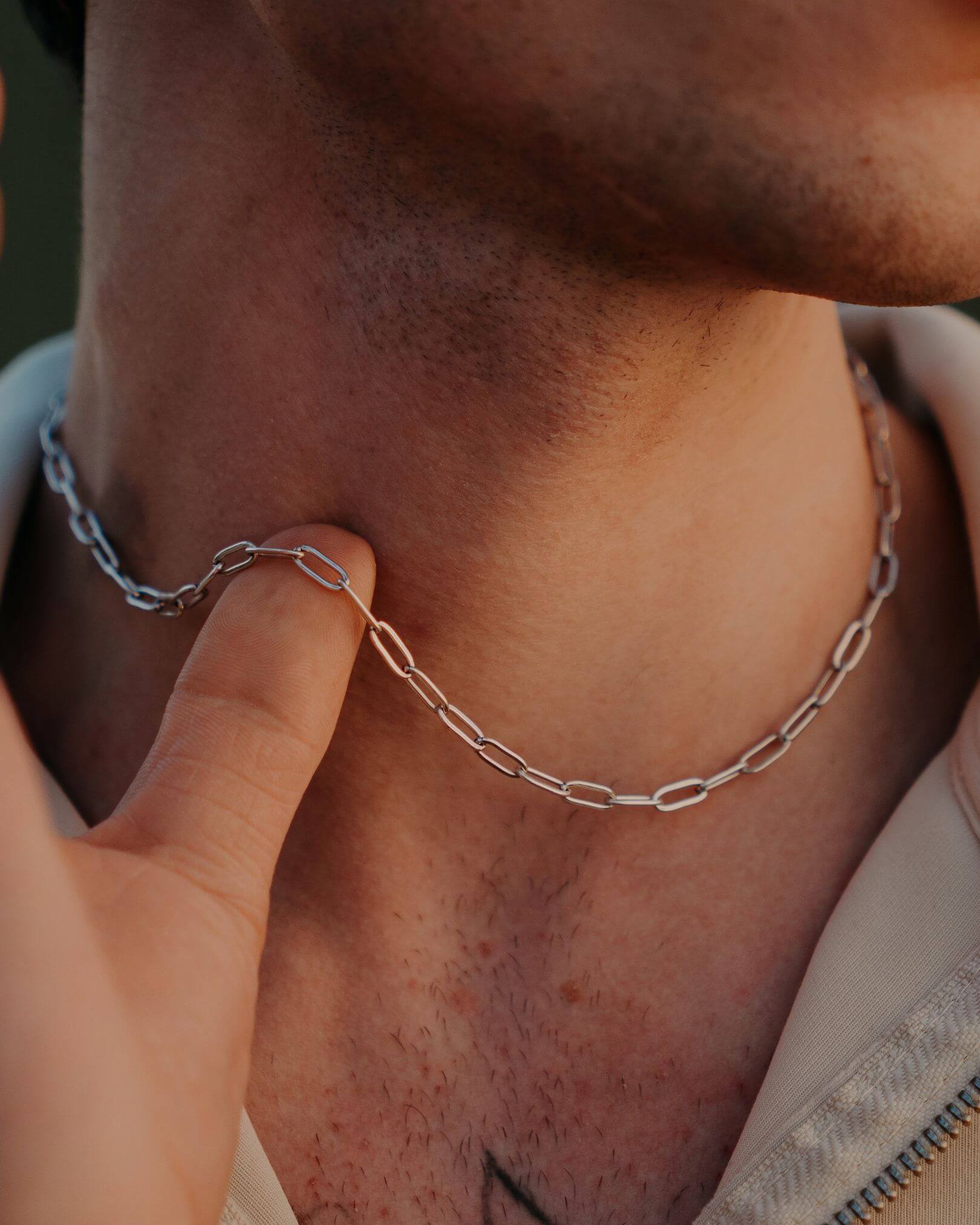
The Atlas chain is built to feel like what it means: solid, substantial, made to last. Cast in premium, water-resistant stainless steel, it keeps its weight and shine through everything a day throws at it — the point of a piece named for endurance.
Strength you can wear, and lean on.
The myth, worn
Wearing Atlas
To wear Atlas is to carry a quiet reminder of your own strength — for the ones who hold things together, and keep going. A piece for the steady.