
The Three Graces: The Charites of Greek Mythology
In every ancient telling of beauty, three sisters are never far away. The Greeks called them the Charites — the Three Graces — and imagined them as the living source of everything lovely, joyful and gracious in the world. Where Aphrodite was desire, the Graces were charm: the quiet radiance that makes a person, a gesture, or a gift a pleasure to behold.
Daughters of Zeus and the sea-nymph Eurynome, they moved in Aphrodite’s retinue, wove her robes, and presided over dance, song, banquets and the blossoming of spring. To the Greek mind they were not a myth to fear but one to enjoy — the goddesses you thanked for beauty itself.
The three sisters
Aglaea, Euphrosyne and Thalia
Hesiod names them in his Theogony, and each carries a shade of the same light:
The Graces
- Aglaea — «radiance, splendour, adornment» — the shine of beauty.
- Euphrosyne — «good cheer, joy, mirth» — the gladness beauty brings.
- Thalia — «festivity, abundance, bloom» — beauty in full flower.
Together they embody a single Greek word: charis (χáρις) — grace. It meant the charm that delights the eye, but also the grace of giving freely and the gratitude of receiving. One word, one circle: to give, to receive, to return.
“The Greeks kept a single word for the beauty that gives joy — charis.”
Daughters of joy
Attendants of Aphrodite

The Graces rarely act alone; their gift is togetherness. Poets placed them beside Aphrodite and Eros, bathing and anointing the goddess of love, crowning brides, and lending their charm to artists, dancers and hosts. It is from them that we still speak of a gracious welcome and a graceful hand.
Because they governed reciprocity — kindness given and returned — the ancients often carved them as three figures linked arm in arm, two facing us and one turned away, forever passing beauty between them.
Across the centuries
The Graces in art
Few images have proved as durable. Botticelli set them dancing in Primavera; Raphael painted them holding golden orbs; Antonio Canova and Bertel Thorvaldsen carved them in luminous marble; Rubens returned to them again and again. For two and a half thousand years, artists have used the same three intertwined figures to say a single thing: that beauty is something we share.
The myth, worn
Wearing the Graces today
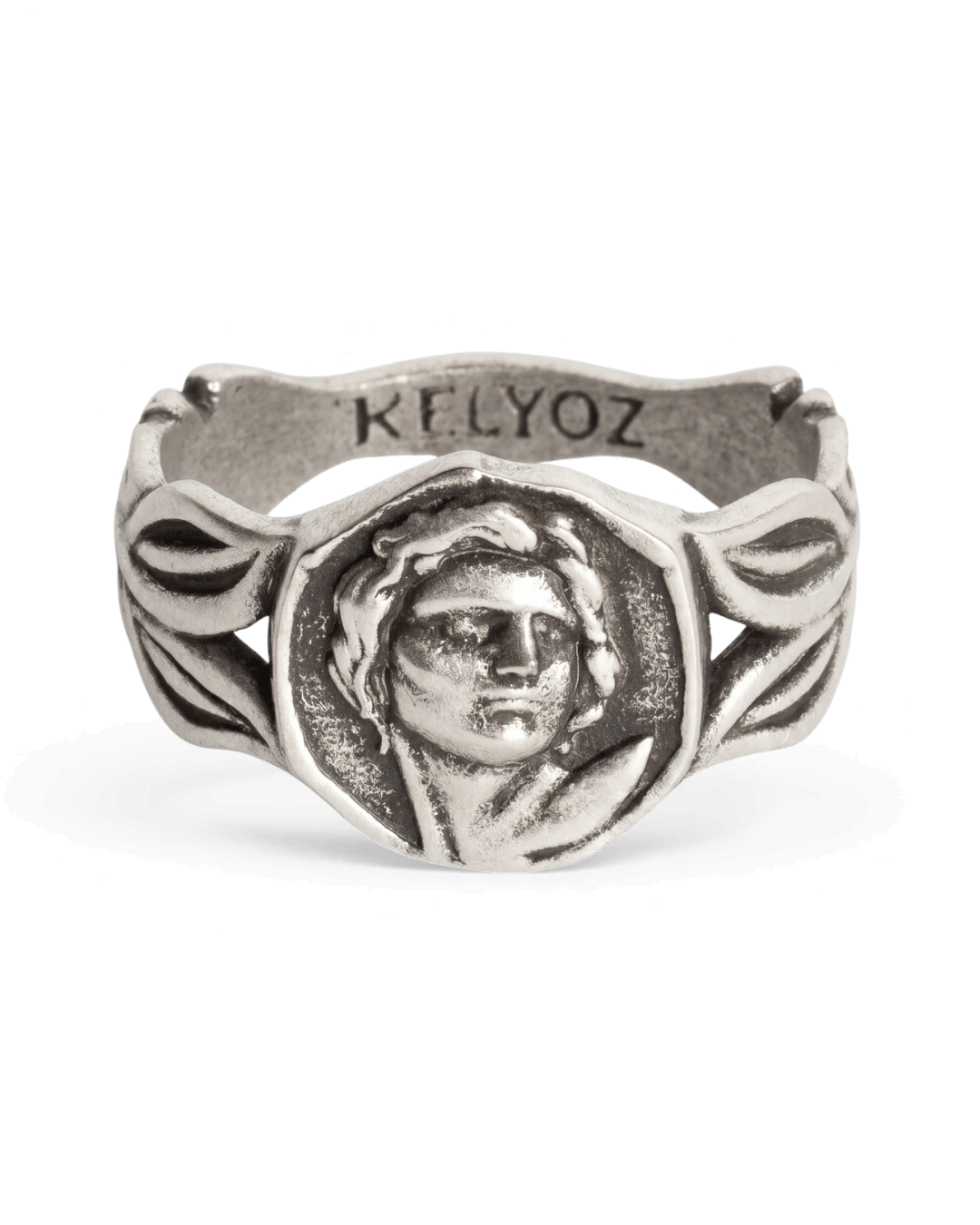
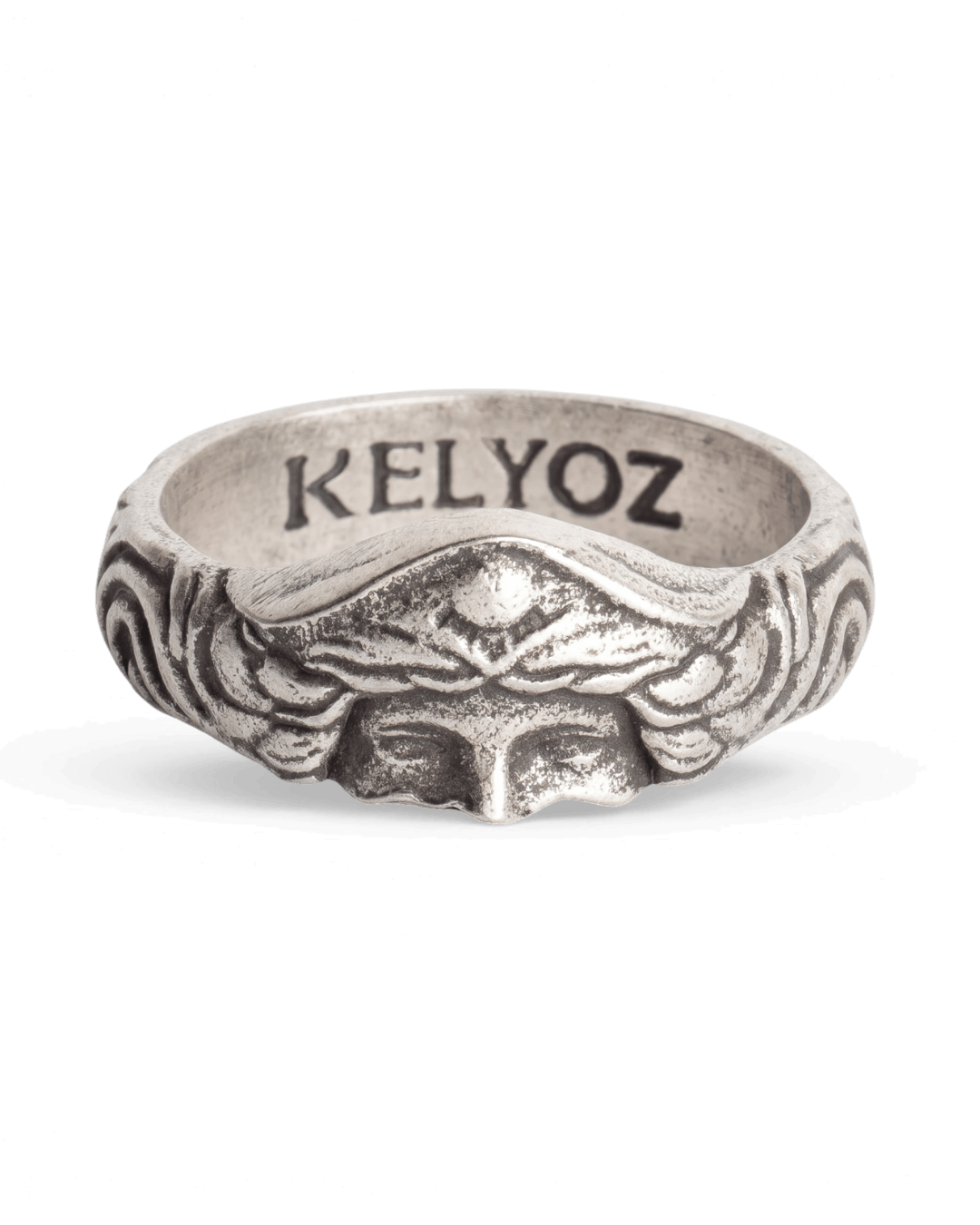
To wear a Grace is to keep a little of that ancient charis close — a reminder that beauty is not vanity but generosity, meant to be given and returned. At Kelyoz each piece is sculpted, not printed: the relief is modelled in three dimensions and cast in premium, water-resistant stainless steel, so the detail keeps its depth and shine for years of everyday wear.
The trio below carries the sisters by name — Charis, the essence of grace itself; Euphrosyne, its joy; and Thalia, its bloom.


Grace, the Greeks believed, was never meant to be kept — only passed on. Worn at the hand, it becomes exactly that: a small, quiet gift you carry, and give, every day.